
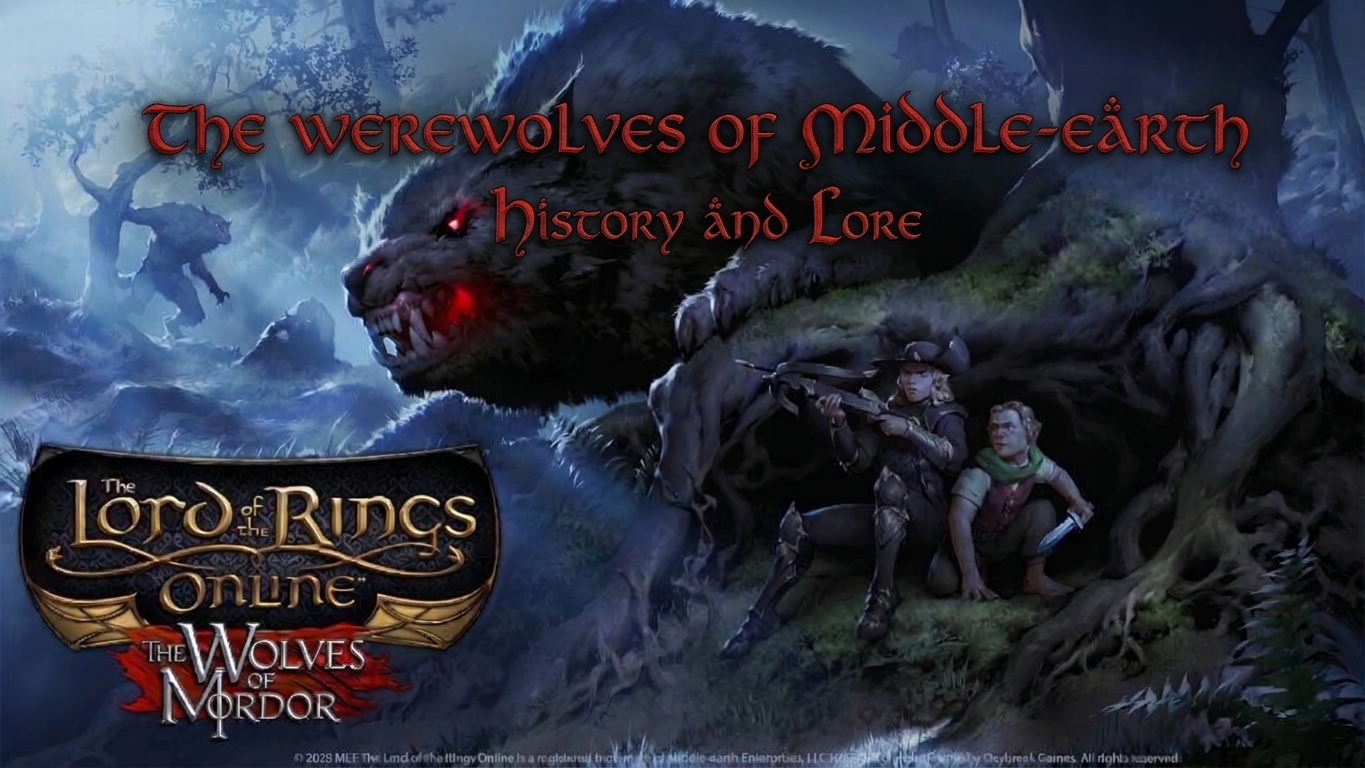
With The Lord of the Rings Online: The Wolves of Mordor sending players back into the shadows of Mordor to confront an ancient werewolf civilization, Standing Stone Games is drawing upon one of the oldest and most terrifying elements of Tolkien’s legendarium. The expansion specifically explores Sauron’s history as the “Lord of Werewolves” and introduces the Draugardh, a society of werewolf-like creatures descended from that dark legacy.
For many Tolkien fans, this may come as a surprise. Werewolves are not commonly associated with The Lord of the Rings in the same way as Orcs, Balrogs, Dragon, or Nazgûl. Yet in the First Age they were among the most feared servants of Morgoth and Sauron, and they played a crucial role in one of the greatest stories Tolkien ever wrote: the tale of Beren and Lúthien.
This is the history of Tolkien’s werewolves, from the Elder Days to their modern revival in LOTRO.
Werewolves in Tolkien Are Not Traditional Werewolves
Before diving into the history, it’s important to understand that Tolkien’s werewolves are very different from the shape-shifting creatures of modern horror fiction.
The werewolves of Middle-earth were not humans cursed to transform under the full moon. They were monstrous wolves inhabited by evil spirits and used as servants of the Dark Powers. Tolkien describes them as creatures associated with Sauron, who filled them with dreadful spirits imprisoned within wolf-like bodies.
In Sindarin, these creatures were called the Gaurhoth, meaning “werewolf-host,” while an individual werewolf was known as a gaur.
Their origins lie not in folklore’s lycanthropy but in Tolkien’s recurring theme of corruption. Morgoth and Sauron could not truly create life; instead, they twisted existing creatures into darker forms. Werewolves belong to the same category of corrupted horrors that includes Orcs, Trolls, and Dragons.
Sauron: The Original Lord of Werewolves
Long before forging the One Ring, Sauron served Morgoth as one of his most powerful lieutenants.
During the First Age, Sauron became known by several fearsome titles, among them Lord of Werewolves. Tolkien repeatedly associates him with wolves and wolf-shaped monsters throughout The Silmarillion.
One of Sauron’s most infamous strongholds was the island fortress of Tol Sirion. After conquering it, he transformed it into Tol-in-Gaurhoth, the Isle of Werewolves. From there he commanded packs of monstrous wolves and spread terror throughout Beleriand.
This connection is significant because it shows that Sauron’s relationship with wolves predates Mordor, the Ring, and even the rise of Númenor. His mastery over werewolves belongs to the deepest layers of Middle-earth’s history.
It is this aspect of Sauron’s past that LOTRO’s expansion explicitly explores. According to Standing Stone Games, The Wolves of Mordor delves into Sauron’s history as the Lord of Wolves and introduces a werewolf society known as the Draugardh.
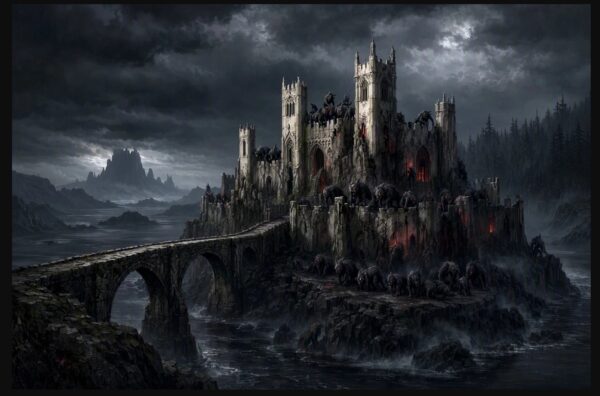
Tol-in-Gaurhoth: The Isle of Werewolves
No location in Tolkien’s legendarium is more closely associated with werewolves than Tol-in-Gaurhoth, the dreaded Isle of Werewolves.
Ironically, the island did not begin as a place of evil. It was originally known as Minas Tirith, a mighty watchtower built by Finrod Felagund upon an island in the River Sirion. The fortress formed part of the northern defenses of the Elven kingdom of Nargothrond, standing watch against the growing threat of Morgoth in the north.
Everything changed when Sauron, then the greatest servant of Morgoth, captured the stronghold. After driving out its defenders, he transformed the once-proud Elven fortress into a place of terror. The island was renamed Tol-in-Gaurhoth, meaning The Isle of Werewolves, and became one of the most feared locations in all of Beleriand.
From this dark citadel, Sauron ruled as the Lord of Werewolves. Its halls were filled with fell spirits, dark sorcery, and packs of monstrous wolves. The island became the breeding ground and gathering place of the Gaurhoth, the werewolf-host that haunted the First Age.
Tol-in-Gaurhoth’s most infamous role came during the tale of Beren and Lúthien. When Beren, Finrod Felagund, and their companions attempted to pass through the region in disguise, they were discovered by Sauron and imprisoned within the fortress. One by one, werewolves were sent into the dungeon to devour the captives. Finrod ultimately sacrificed his life fighting a werewolf with his bare hands in order to save Beren, one of the most heroic deaths in The Silmarillion.
The fortress would eventually fall when Lúthien and Huan, the Hound of Valinor, came to challenge Sauron’s power. Huan slew the werewolves defending the island, including the mighty Draugluin, while Lúthien’s enchantments forced Sauron himself into a desperate confrontation. Defeated by Huan in wolf-form, Sauron surrendered the fortress and fled. The Isle of Werewolves was reclaimed, ending one of the darkest chapters in the history of Beleriand.
For Tolkien enthusiasts, Tol-in-Gaurhoth represents far more than a fortress. It is the physical embodiment of one of his central themes: the corruption of beauty. A noble Elven stronghold became a lair of darkness, much as Morgoth and Sauron sought to twist the works of others into instruments of fear. The tragedy of Minas Tirith’s fall into Tol-in-Gaurhoth mirrors the broader struggle of the First Age itself, where even the greatest realms could be consumed by Shadow.
It is also the setting most closely tied to Sauron’s forgotten title as Lord of Werewolves, making it a particularly fascinating point of reference as The Lord of the Rings Online: The Wolves of Mordor explores the ancient legacy of Middle-earth’s most infamous wolf-servants.
Draugluin: Father of Werewolves
The first and greatest of Sauron’s werewolf servants was Draugluin.
Known as the “Father of Werewolves,” Draugluin was bred by Sauron and became the progenitor of the werewolf race. All later werewolves of Beleriand were said to descend from him.
Draugluin dwelt at Tol-in-Gaurhoth alongside Sauron and played a major role during the Quest of the Silmaril.
Eventually Draugluin faced Huan, the legendary Hound of Valinor. The encounter ended disastrously for the werewolf lord. After being wounded by Huan, Draugluin fled to warn Sauron but soon died from his injuries.
His death would prove crucial to one of Tolkien’s most ingenious disguises.
Beren and Lúthien: The Werewolf Disguise
One of the most memorable moments in The Silmarillion involves Draugluin’s corpse.
To infiltrate Angband itself, Lúthien enchanted the skin of the dead werewolf. Beren wore Draugluin’s hide and took on the appearance of a werewolf, while Lúthien disguised herself using the form of the vampire Thuringwethil. Together they passed through enemy territory and approached Morgoth’s fortress.
The sequence feels remarkably different from anything found in The Lord of the Rings. It reveals a darker, more mythic side of Tolkien’s storytelling, filled with shape-changing, enchantments, and monsters straight out of ancient legend.
Huan vs. Sauron: One of Tolkien’s Greatest Battles
Perhaps the most fascinating werewolf story in Tolkien’s works is the duel between Huan and Sauron.
When Lúthien challenged Sauron’s control of Tol-in-Gaurhoth, the Dark Lord responded by sending werewolf after werewolf against Huan. Each one was slain. Finally, Sauron himself took the form of a gigantic wolf, described as the greatest wolf-form yet seen.
The resulting battle is one of the few occasions in Tolkien’s legendarium where Sauron personally fights an opponent.
Huan defeated him.
Humiliated and overpowered, Sauron surrendered control of the fortress and escaped in the shape of a vampire. The Isle of Werewolves fell, and one of the Dark Lord’s most formidable First Age strongholds was lost.
For readers accustomed to seeing Sauron as an untouchable power behind the scenes, this episode offers a rare glimpse of the Dark Lord at his most vulnerable.
Carcharoth: The Greatest Werewolf Ever to Live
If Draugluin was the father of werewolves, Carcharoth was their ultimate terror.
Foreseeing that Huan would one day perish only at the jaws of the greatest wolf who ever lived, Morgoth raised a descendant of Draugluin and poured his power into the beast. This creature became Carcharoth, whose name means “Red Maw.”
Carcharoth guarded the gates of Angband.
When Beren and Lúthien escaped with a Silmaril, the wolf attacked them. In one of the most dramatic moments in Tolkien’s mythology, Carcharoth bit off Beren’s hand and swallowed the Silmaril it contained. The holy jewel burned within the monster, driving him into madness.
His rampage became legendary.
The hunt that followed brought together some of the greatest heroes of the age. Carcharoth was finally slain, but not before mortally wounding Huan, fulfilling the prophecy surrounding the hound’s fate.
Many Tolkien scholars consider Carcharoth one of the greatest monsters in the entire legendarium, rivaling even dragons in terms of narrative significance.
Werewolves After the First Age
Following Morgoth’s defeat, werewolves largely disappear from Tolkien’s narratives.
Unlike Orcs and Trolls, they never become a major force during the Second or Third Ages. However, Tolkien never entirely removed them from Middle-earth’s history.
In The Fellowship of the Ring, Gandalf directly mentions werewolves among the servants of Sauron, alongside Orcs, Trolls, Wraiths, and other evil creatures. This brief reference confirms that the memory, and possibly the survival, of such creatures endured into the era of The Lord of the Rings.
This single reference has long fascinated readers because it suggests untold stories lingering beyond the boundaries of the main trilogy.
Werewolves, Wargs, and Wolves: What’s the Difference?
This is a question Tolkien fans often ask.
Ordinary Wolves
Normal wolves exist throughout Middle-earth and behave much like their real-world counterparts.
Wargs
Wargs are intelligent evil wolves frequently allied with Orcs. They appear prominently in both The Hobbit and The Lord of the Rings. They can communicate and often serve as mounts for goblins and Orcs.
Werewolves
Werewolves are something far darker. They are spiritual monstrosities linked directly to Sauron and Morgoth, infused with evil powers and often possessing intelligence far beyond ordinary animals.
While modern fantasy often treats werewolves as transformed humans, Tolkien’s conception is closer to demonic wolf-beasts serving the Enemy.
Why LOTRO’s The Wolves of Mordor Is Such an Interesting Lore Choice
One of the most remarkable aspects of the upcoming expansion is its focus on an often-overlooked corner of Tolkien’s mythology.
According to Standing Stone Games, players will explore the hidden lands of Draugardh beyond Mordor and encounter a werewolf society descended from Sauron’s ancient legacy. The story specifically draws upon Sauron’s First Age identity as the Lord of Wolves while expanding that concept into a full-fledged culture.
This gives LOTRO the opportunity to explore material rarely seen in Tolkien adaptations:
- The legacy of Tol-in-Gaurhoth
- Sauron’s mastery over werewolves
- The ancient Gaurhoth
- First Age mythology connected to Beren and Lúthien
- The lingering remnants of Morgoth’s horrors after the War of the Ring
For longtime Tolkien readers, that makes The Wolves of Mordor one of the most lore-rich concepts the game has tackled in years.
Final Thoughts
When most people think of Tolkien monsters, dragons, Balrogs, Nazgûl, and Orcs come to mind first. Yet werewolves occupy a unique place within the mythology of Middle-earth. They were among Sauron’s earliest and most terrifying servants, guardians of the Isle of Werewolves, enemies of Huan, and participants in the legendary Quest of the Silmaril.
From Draugluin, the Father of Werewolves, to the terrible Carcharoth, whose bite changed the fate of Beren forever, these creatures are woven into some of Tolkien’s oldest and most powerful legends.
Now, as The Lord of the Rings Online: The Wolves of Mordor revisits that ancient darkness, players have a chance to step into a chapter of Middle-earth history that has remained in the shadows for decades: the age when Sauron was not merely the Dark Lord of Mordor, but the dreaded Lord of Werewolves.
To take a page from Bram Stoker
“Listen to them, the children of the night. What music they make!”

