
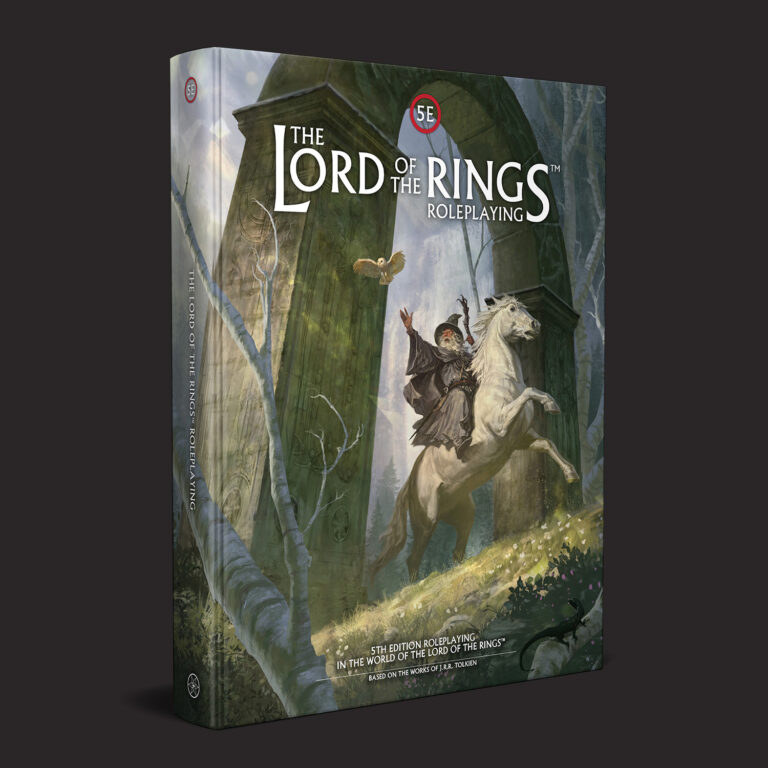
Free League Publishing has long been known for its impeccable design, and with The Lord of the Rings Roleplaying, they have pulled off a near-miracle: taking the world’s most popular tabletop system (5th Edition) and adapting it to perfectly capture the low-magic, high-stakes spirit of J.R.R. Tolkien’s Middle-earth. This isn’t just D&D with Elves; it is a meticulously crafted, thematically rich game that emphasizes fellowship, the peril of long journeys, and the weight of the encroaching Shadow.
For players familiar with the 5E ruleset, this book serves as the ideal bridge into a more grounded, literary style of fantasy. It strips away the high-fantasy spell-slinging and replaces it with mechanics that force heroes to truly struggle against the darkness, making every small victory feel profoundly earned.
The Art of the Ages: Capturing Middle-earth’s Soul
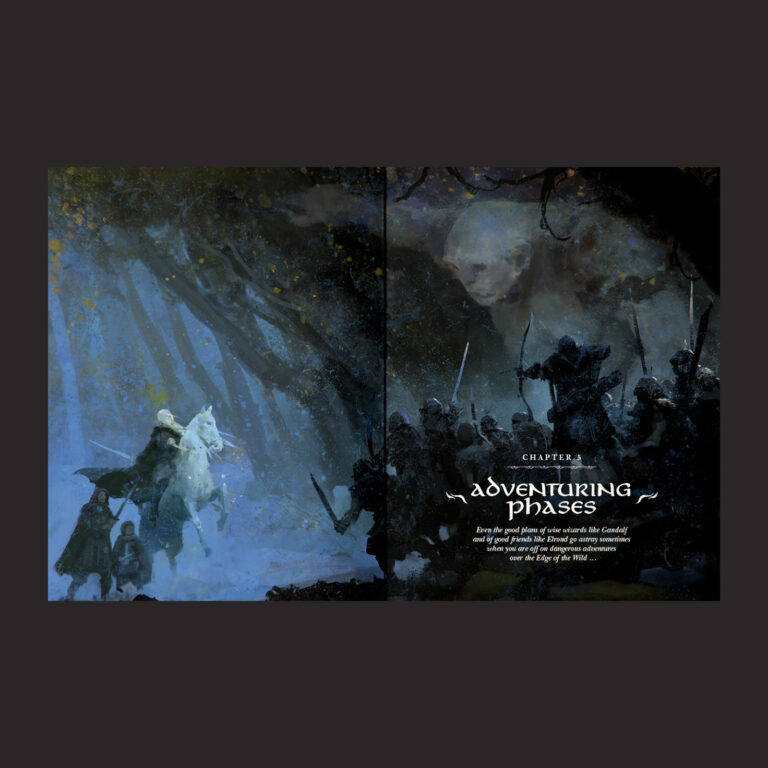
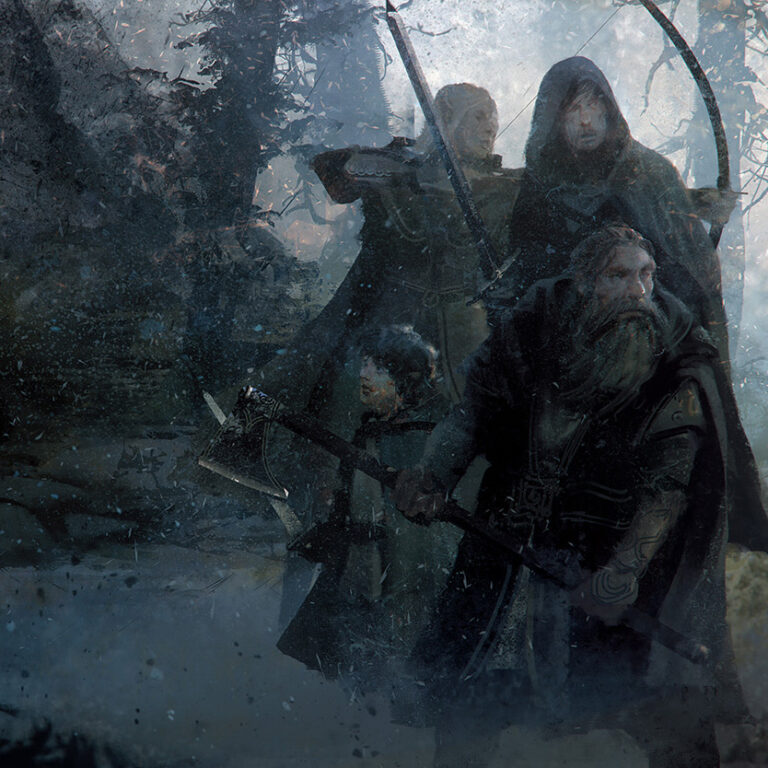
Before even diving into the mechanics, one must linger on the sheer beauty of this book. Free League maintains its commitment to outstanding production value, and the aesthetic here is second to none. The artwork, featuring contributions from artists like Antonio de Luca on the covers, evokes a sense of age and melancholy that perfectly fits the Third Age setting.
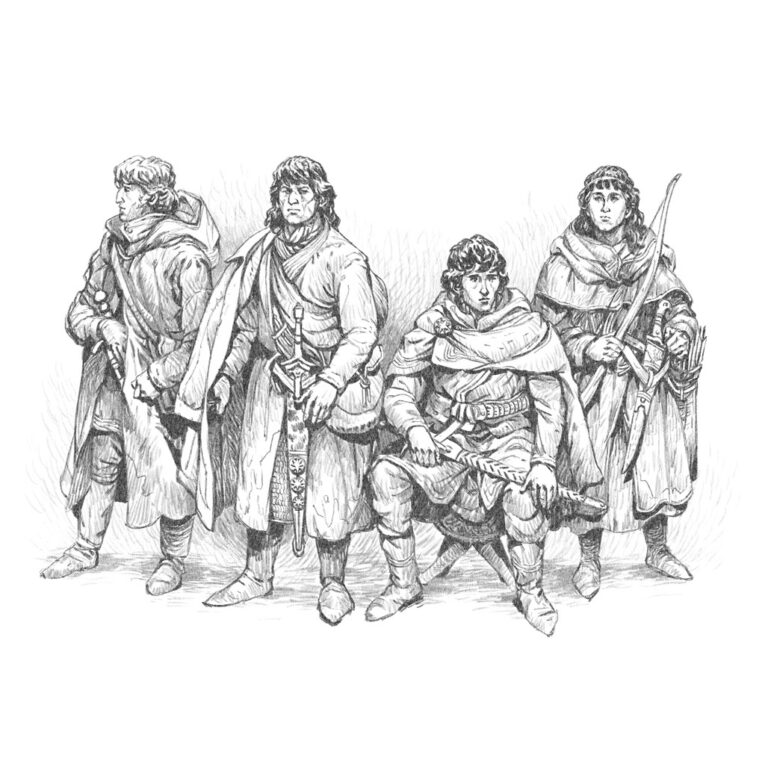
The interior art primarily uses a stunning black-and-white, pencil-sketch aesthetic. It feels less like bombastic, full-color fantasy fare and more like illustrations from an ancient, rediscovered manuscript or a Ranger’s sketchbook. This visual style immediately sets the tone—it is serious, evocative, and deeply faithful to the source material, ensuring the game feels like a genuine extension of Tolkien’s world.
Heroic Cultures: Defining Your Place in the World
Forget the standard D&D races; in Middle-earth, your background is your Heroic Culture. The book anchors your identity in the lore, offering distinct options that shape your abilities and outlook on the world. You’ll choose not simply Dwarf or Elf, but specific cultures like the Dwarves of Durin’s Folk, the Elves of Lindon, or the hardy Rangers of the North.
These cultures don’t just grant ability score increases; they provide unique Cultural Blessings that tie directly into the setting. For example, a Hobbit of the Shire might be exceptionally good at avoiding notice in the familiar lands of Eriador, reflecting their ability to blend into the quiet, everyday world. A Man of Bree, accustomed to dealing with both the Little Folk and the Big Folk, might gain a bonus to social checks in those mixed settings. This approach makes character creation a thematic choice first and a mechanical choice second, deepening player immersion from the start.
The Rules of the Road: Hope, Shadow, and the Journey
The genius of this adaptation lies in its rules, which are carefully modified from the standard 5E structure to reinforce the themes of Middle-earth. You don’t just “level up” in power; you deepen your commitment to the long, difficult struggle.
1. The Shadow Path (Corruption)
The most thematic addition is the Shadow system. Heroic characters have a limited pool of Hope, a vital resource representing their mental resilience and spirit. When heroes witness terrible events, fail morally, or suffer setbacks, they gain Shadow Points. If a character gains too much Shadow, they move down their personal Shadow Path—a representation of succumbing to moral failings like Greed, Wrath, or Pride. Spending a point of Hope can grant Advantage on a roll, but when Hope is depleted, the heroes face the risk of Despair.
Example: The Lure of Secrets A Scholar Player-hero might have the Lure of Secrets as their Shadow Path. If they accumulate enough Shadow, they become Miserable. As a Miserable hero, they might be compelled to pursue forbidden knowledge even if it endangers the company or leads them to dark places. This is where the game brilliantly reflects the internal struggles of characters like Boromir and Frodo, making moral choices mechanically meaningful. It forces players to play the internal drama—it’s not just a negative status effect, it’s a personality shift driven by the world’s pervasive darkness.
2. The Journey Rules
The narrative importance of travel is handled through specific Journey Rules. Rather than simply declaring they travel from Bree to Rivendell, players must assign roles within the Company (Guide, Scout, Look-out, Hunter), using modified 5E skill checks to resolve travel events. These roles create challenges that tax the party’s resources (like Endurance and Hope) before they even reach the destination, ensuring the journey is a core part of the adventure, not just a travel montage.
3. Fellowship and Council
The game also structures downtime beautifully with the Fellowship Phase and Council mechanics. The Council phase provides clear rules for important social encounters, where Player-heroes must debate or negotiate with powerful figures (like Elrond or Gandalf), using Charisma or Intelligence checks to sway the conversation. The Fellowship Phase, meanwhile, is a designated time between adventures where heroes recover, spend accumulated Experience, and reflect on their deeds, allowing them to undertake personal projects, learn new skills, or simply rest in a safe haven like Rivendell.
The Verdict
The Lord of the Rings Roleplaying is a masterful blending of two great pillars of fantasy. It uses the accessibility of 5E to welcome new players while introducing streamlined, elegant mechanics from The One Ring that are deeply interwoven with Tolkien’s lore. If you want a fantasy game where every fight is deadly, every long road is a trial, and every success feels earned through courage and fellowship, this is the book you need.
Disclaimer
The review copy of The Lord of the Rings Roleplaying was provided by Free League Publishing. This had no bearing on the honesty or final outcome of this review.
1 thought on “A Shadow and a Song: Reviewing The Lord of the Rings Roleplaying (5E)”